

Showing posts with label Crew Blog Hop. Show all posts
Showing posts with label Crew Blog Hop. Show all posts
Thursday, August 13, 2020
How to Teach Toddlers (Especially When You Have Older Children)
Head on over to the Old School House Homeschool Review Crew blog and read my guest post on teaching toddlers especially while homeschooling older children! I breakdown how I incorporate Tot School with Zeke by using Tot Trays and offer tips for a smooth and fun Tot Time with your toddler!

Tuesday, August 11, 2020
Must Have Resources: Blog Hop!
I have been homeschooling for 12 years. Throughout this time I have found supplies and resources that have been invaluable to me. I want to share a few of my "Must Have" resources with you today. These links are not affiliate links; they are just for your convenience!

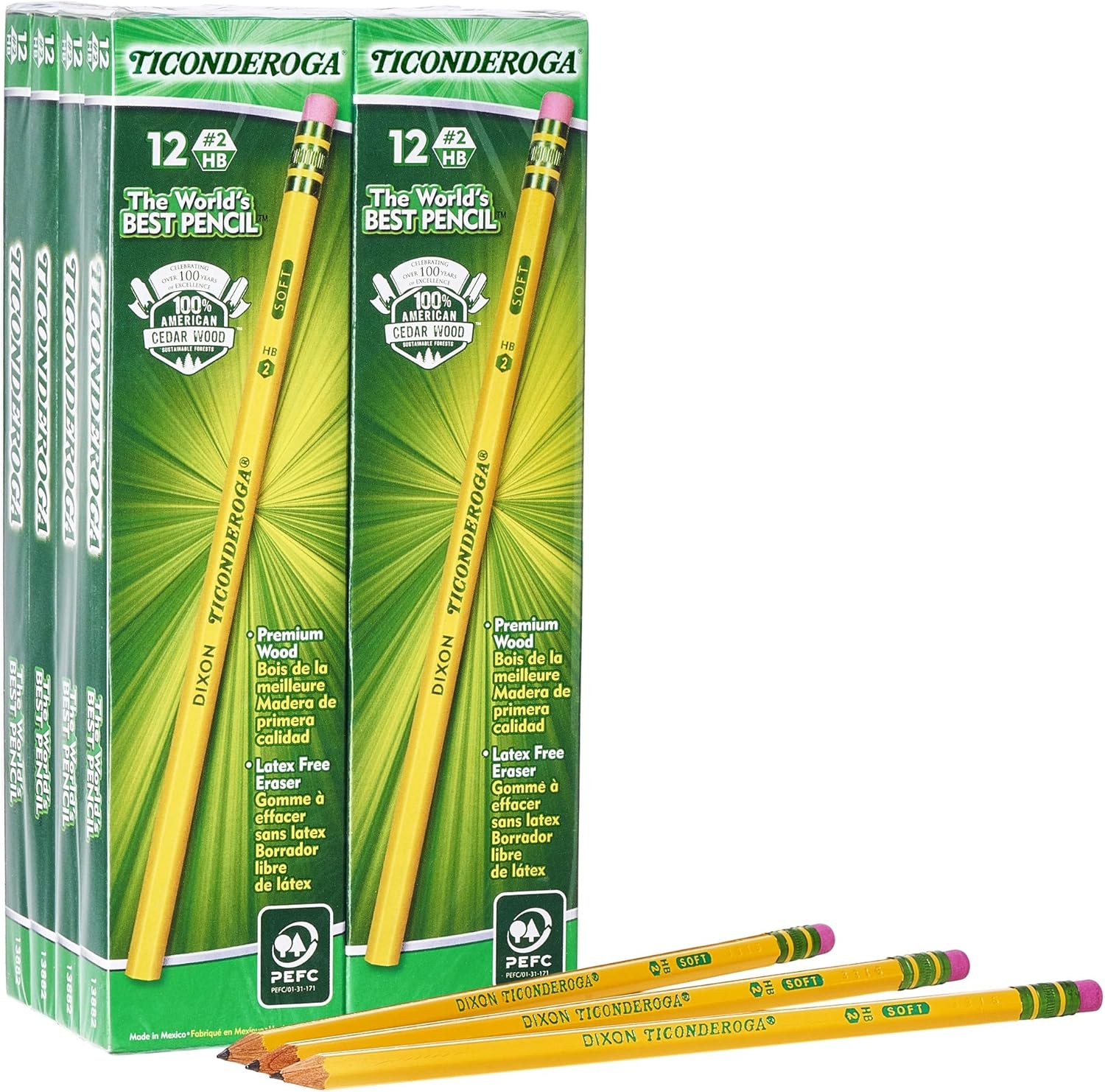


- A good pencil sharpener! This sort of goes without saying, but having a good pencil sharpener will make your homeschool day go much smoother! There's nothing worse than using a dull or cheap pencil sharpener and having your pencils break or not sharpen.
- Good pencils! Invest in good pencils and they will save your sanity. Ticonderoga have always been good. They sharpen evenly and don't break easily. The cute pencils with the decorative wrapping - skip those. The wrapping will come off, clog your sharpener, and cause you unnecessary grief!
- Sheet protectors! I use sheet protectors in our binders to keep our pages fresh and pretty. I hate when pages get torn out of binders and you have papers sticking out and falling out. Sheet protectors keep binders neat and pages in tact. They can be expensive, but it's worth it to me!
- Laminator! I use my laminator all the time, especially with my younger kids. I laminate flash cards, games and pieces, resources I want to reuse, and charts. It makes things so durable and almost impossible to destroy. I have had my laminator for years and it still works perfectly!
Those are my top four must have resources for the school year! Tomorrow I'll be sharing about curriculum.
Monday, August 10, 2020
Back to School Traditions: Blog Hop!
I have been homeschooling for about 12 years. We don't have any fancy back-to-school traditions, but we do have a few things that the kids always look forward to when we are starting a new school year.
NEW SCHOOL SUPPLIES! This is one of my kid's favorite things - picking out new pencils, notebooks, binders, crayons, colored pencils, and markers. They love to go through their new school supplies and organize and re-organize them. When I was a kid in public school, this was always the best part of going back to school for me!


NEW SCHOOL SUPPLIES! This is one of my kid's favorite things - picking out new pencils, notebooks, binders, crayons, colored pencils, and markers. They love to go through their new school supplies and organize and re-organize them. When I was a kid in public school, this was always the best part of going back to school for me!
SPECIAL BREAKFAST! I usually cook cinnamon rolls for the first day of school. It's not something I make often, so it is a special treat for the kids!
SKATE PARTY! I don't know if we will be able to have it this year, but our homeschool group has a back-to-school skate party each August! Last year was our first year going, but we plan to make it a tradition.
What are your back-to-school traditions?
Monday, August 8, 2016
Homeschooling 101: Curriculum
I am taking part in the August BlogHop with the Schoolhouse Review Crew this week, and I am so excited! Today the topic is curriculum.
I've been homeschooling for 8 years now, and I truly believe that finding and using the right curriculum for your family is the key to successful homeschooling!
When choosing curriculum, there are some basic questions you should ask yourself. Maybe even write down the answers on a sheet of paper for quick future references.
What is my child's learning style? There are 3 basic learning styles - auditory, visual, and kinesthetic. They are pretty self-explanatory. An auditory learner learns best through listening or reading aloud; a visual learner learns best by watching something being demonstrated or making charts and graphs; a kinesthetic learner learns best through hands-on activities and with lots of movement. Figure out which learning style your child leans toward the most {some children have one dominate style, while others have two}. Then, you can research curriculum that will help your child to be successful.
What are your strengths and weaknesses, as a mom and teacher? This is very helpful in choosing curriculum, because if you choose a product that you hate having to use, you probably aren't going to use it. For example, if you hate to read aloud, then you probably don't want to use a literature based curriculum. Or if you don't enjoy science experiments, you probably want to choose a video-based science program.
What is the cost? Don't just figure out the cost of the curriculum package. You need to look and see what extras you will have to have to make the program work. See if you will need binders and dividers, art supplies, science experiment supplies, or extra books. Add up everything to make sure it will be an investment you can make.
What are the theological beliefs of the authors? If you are a young-earth creationist {like myself}, you will want to choose a science and history program that confirms that belief for your children, not from an evolutionist point of view. There are some great curriculum publishers with different beliefs that we have used {Rod and Staff, for example, is from a Mennonite publisher} that haven't conflicted with what we believe. I would never choose a curriculum that went against what I know to be true, and I always make sure of that. Even when buying children's books, I make sure they don't discuss evolution or talk about millions of years ago.
How much time will this take? Most people have a pre-conceived notion of how long their child's school day should last. Read reviews and the FAQ sections for the program you are looking at. You don't want to purchase a curriculum that intends to take an hour, when all you want to spend is 30 minutes.
Here are our curriculum choices for this year:
Mikaela - 8th grade
Mercie - 3rd grade
See what the other members of the Crew had to say about curriculum!
I've been homeschooling for 8 years now, and I truly believe that finding and using the right curriculum for your family is the key to successful homeschooling!
When choosing curriculum, there are some basic questions you should ask yourself. Maybe even write down the answers on a sheet of paper for quick future references.
What is my child's learning style? There are 3 basic learning styles - auditory, visual, and kinesthetic. They are pretty self-explanatory. An auditory learner learns best through listening or reading aloud; a visual learner learns best by watching something being demonstrated or making charts and graphs; a kinesthetic learner learns best through hands-on activities and with lots of movement. Figure out which learning style your child leans toward the most {some children have one dominate style, while others have two}. Then, you can research curriculum that will help your child to be successful.
What are your strengths and weaknesses, as a mom and teacher? This is very helpful in choosing curriculum, because if you choose a product that you hate having to use, you probably aren't going to use it. For example, if you hate to read aloud, then you probably don't want to use a literature based curriculum. Or if you don't enjoy science experiments, you probably want to choose a video-based science program.
What is the cost? Don't just figure out the cost of the curriculum package. You need to look and see what extras you will have to have to make the program work. See if you will need binders and dividers, art supplies, science experiment supplies, or extra books. Add up everything to make sure it will be an investment you can make.
What are the theological beliefs of the authors? If you are a young-earth creationist {like myself}, you will want to choose a science and history program that confirms that belief for your children, not from an evolutionist point of view. There are some great curriculum publishers with different beliefs that we have used {Rod and Staff, for example, is from a Mennonite publisher} that haven't conflicted with what we believe. I would never choose a curriculum that went against what I know to be true, and I always make sure of that. Even when buying children's books, I make sure they don't discuss evolution or talk about millions of years ago.
How much time will this take? Most people have a pre-conceived notion of how long their child's school day should last. Read reviews and the FAQ sections for the program you are looking at. You don't want to purchase a curriculum that intends to take an hour, when all you want to spend is 30 minutes.
Here are our curriculum choices for this year:
Mikaela - 8th grade
- America the Beautiful, Part 2 {Notgrass} - history and geography
- Intro to Oceanography and Ecology {Master Books} - science
- Principals of Mathematics {Master Books} - pre-algebra
- Learning Language Arts Through Literature, the green book - language arts
- Writer's in Residence {Apologia} - writing
- Rosetta Stone - Spanish
- Artistic Pursuits - art
- America the Beautiful, Part 1 {Notgrass} - history and geography
- Into to Meteorology and Astronomy {Master Books} - science
- Principals of Mathematics {Master Books} - pre-algebra
- Learning Language Arts Through Literature, tan book - language arts
- Writer's in Residence {Apologia} - writing
- Rosetta Stone - Spanish
- Art Pack {Christian Liberty} - art
Mercie - 3rd grade
- Story of the World, Volume 1 - history
- Apologia Astronomy - science
- Math for a Living Education, level 3 {Master Books} - math
- Learning Language Arts Through Literature, yellow book - language arts
- Writing Journal - writing
- Book Units from Christian Homeschool Hub - reading
- Story of the World, Volume 1 - history
- Apologia Astronomy - science
- Math for a Living Education, level 1 {Master Books} - math
- Jolly Phonics - phonics
- Patriotic Penmanship - handwritin
- Biblical Beginnings for Preschool {Master Books}
See what the other members of the Crew had to say about curriculum!
Monday, March 28, 2016
Charlotte Mason Homeschooling, Part 1: The Early Years

My family is moving toward a Charlotte Mason homeschool, and I am learning so much along the way. I hope to share some of what I've been learning with you this week as I take part in the School House Review Crew March Blog Hop - 5 Days of Tips for Homeschool Parents. I'll be sharing on the following topics:
Day 1: The Early Years
Day 2: Multiple Ages
Day 3: Enrichment Studies
Preschool and Kindergarten are what Charlotte Mason called "The Early Years". The early years are very important to a child's future education. However, Mrs. Mason did not encourage formal lessons at this age. In fact, she thought it best for a child to be at least 6 or 7 years old before he started formal school lessons, and even then, that they be kept short and interesting.
So what exactly do the early years look like? Shouldn't children be learning to read and write? Should a child be allowed to run around in total freedom? I'm going to talk about five aspects of a Charlotte Mason education that should be introduced {and expanded upon} in the early years.
Handicrafts and Skills

Handicrafts are different from arts and crafts. While learning to cut and paste are very important skills to learn, paper crafts aren't "handicrafts" as defined by Charlotte Mason. A handicraft is a skill learned that produces something useful. {I have a page on my blog listing some of the handicrafts we have done, if you are interested.}
A few examples would be:
- lacing beads and cards
- watercolor painting
- making simple toys
- beginner mosaic crafts
- beginner sewing or embrodiary
- making a bird house {we use tin cans}
- baking cookies or bread
- building with Legos or wooden blocks
- learning hygiene {brushing teeth, washing hair, getting dressed}
- making wind chimes
- making Christmas ornaments
- play-dough and modeling clay
There are many more handicrafts that children this age can create and many skills to be learned. We try to do one handicraft a week, but some weeks we do several and some weeks we may not do anything other than watercolor painting.
Nature Study

Nature Study is such a simple thing to incorporate into your daily homeschool. Of course, playing outside can be considered nature study, as many young children are constantly observing insects and frogs, picking flowers and looking at the roots and petals, and asking a myriad of questions. But making a point to do a formal nature study once or twice a week is a simple and important thing you can do in the early years {and really, in all the years!}
A few things you can do for formal nature study would be:
- bird watching
- planting seeds and watching them grow
- observing the clouds and wind
- keeping a weather chart and checking the thermometer
- watching ants or other bugs
- having a picture scavenger hunt {certain plants and bugs to find}
- having a sound-only scavenger hunt {listening for birds, the wind, crickets, and such}
- feeding ducks at a pond
- making nature bracelets {use packing tape, sticky-side up, wrapped around your child's wrist}
Living Books


Reading books is usually a given when you have small children. All of my children have loved to be read to from a young age. Having a nice size supply of living books available for your children to explore is a great idea.
What is a "living book"? I took this definition from Simply Charlotte Mason:
Living books are usually written by one person who has a passion for the subject and writes in conversational or narrative style. The books pull you into the subject and involve your emotions, so it’s easy to remember the events and facts. Living books make the subject “come alive.” They can be contrasted to dry writing, like what is found in most encyclopedias or textbooks, which basically lists informational facts in summary form. You might be surprised to find that living books are available for most school subjects — even math, geography, and science!
There are many living books for the early years that your child will enjoy, and he will learn through simply reading a book to him! A few of our favorite living books series for the preschool and kindergarten ages are:
- Let's Read and Find Out Science {not from a Christian science point of view, but still excellent}
- Ordinary People Change the World
- Berenstain Bear books {there are books on seasons, manners, animals, and so much more}
- Step Into Reading Readers {again, the subjects are so vast - science, history, math, geography}
- Poetry and Rhyme books {here's our favorite}
- Christian Liberty Nature Readers
- Story Bibles {the greatest living book of all}
You don't have to do any fancy activities or add anything to rich literature. Simply read and let your child soak in the knowledge.
Finger Plays, Rhymes and Songs

I'm not sure if Charlotte Mason actually advocated for this, but I found it a gentle and effective way to teach your younger children. We use songs to learn the days of the week, months of the year, skip counting, and Bible stories. We use finger plays to learn the days of creation and counting. We use rhymes to learn, well, rhyming words! You can use songs to teach scripture memorization or poetry memorization, states and capitals, and animals and their sounds. Here is a list of some great fingerplays and rhymes you can do with your children. Besides being educational, they are just fun!
Hands-On Pre-Reading, Pre-Writing and Math

This is not necessary for the early years, but some parents really want their preschool and kindergarten children to learn how to read and how to add and subtract. I do introduce and use many math and pre-reading and pre-writing manipulatives and toys at this age, but I don't do "formal" lessons until around mid-Kindergarten {and even then, they are short - 10 minutes each}.
Some great items to have would be:
- letter tiles
- number tiles
- dice
- pattern blocks
- puzzles
- counting bears
- integer blocks
- counting cubes
- alphabet flash cards {two sets for games}
- concentration game
- Candy Land and Chutes and Ladders
- Hi-Ho Cherry-Oh
- large plastic coins
- dot markers
- word building with letter tiles. Just write a word on an index card and allow the child to build the word with the letter tiles and practice sounding them out. You can work on word families {cat, bat, mat, rat} or words from a book you have been reading.
- letter building with playdough, craft sticks, or pipe cleaners.
- learning to add and subtract with dice. Or Legos. Or beans. Or counting bears. Just make it a game, and your child will love it!
- playing concentration with alphabet flash cards. Use a few letters at time, preferably some the child is learning.
- writing letters in shaving cream, whipped cream, or a salt try.
I hope that you understand the main point of this post: The early years should be a gentle introduction into learning. Don't push worksheets and reading lessons on your young child. They will learn all they need to learn and more by the activities listed above. Enjoy your child. Read books. Play outside. Read more books. Play outside some more.

I am actually in the process of writing a "The Early Years: Preschool Guide" curriculum guide. It is a 5-day, weekly schedule with nature study, reading, alphabet and math fun, and Bible lessons. I'm hoping to have it done early May, so I can use it with my almost-4 year old, Titus.
Come back tomorrow for the next post in this series: Charlotte Mason Homeschooling - Multiple Ages.
Visit some of the other participating Crew Members for their Tips for Homeschool Parents.
Annette @ A Net In Time
Brandy @ Kingdom Academy Homeschool
Brenda @ Counting Pinecones
Carol @ Home Sweet Life
Cassandra @ A Glimpse of Normal
Chareen @ Every Bed of Roses
Crystal @ Crystal Starr
DaLynn @ Biblical Womanhood
Danielle @ Sensible Whimsy

Subscribe to:
Posts (Atom)